Showing posts with label fairy. Show all posts

Tuesday, 4 November 2014

Mythology, Legend and Folklore of the Sky - Part One - The Aurora

Definition of Aurora: 'a natural electrical phenomenon characterised by the appearance of streamers of reddish or greenish light in the sky, especially near the northern or southern magnetic pole.  The effect is caused by the interaction of charged particles from the sun with atoms in the upper atmosphere.  In northern and southern regions it is respectively called aurora borealis or Northern Lights and aurora australis or Southern Lights.'

Ezekiel, a prophet of ancient Israel is believed to have written the following in the 6th century BC, '... a whirlwind came out of the north, a great cloud, and a fire infolding itself, and a brightness was about it, and out of the midst thereof as the colour of amber, out of the midst of fire.'  Aristotle, the Greek philosopher also observed the aurora in 344BC, which he compared with flames from known sources on Earth.  The term 'aurora borealis' was coined by Galileo Galilei in 1619 after Aurora, the Roman goddess of morning.  Galileo believed the aurora was cause by sunlight reflecting from the atmosphere.  The Romans called the aurora 'chasmate' meaning the mouths of celestial caves.

I have always been fascinated by the aurora and it seems I'm not alone.  This spectacular light displate has awed people the world over since prehistoric times and has inspired the creation of fantastical stories.  The oldest recorded sighting of the aurora comes from China in 2600BC: 'Fu-Pan, the mother of the Yellow Empire Shuan-Yuan, saw strong lightning moving around the star Su, which belongs to the constellation of Bei-Dou, and the light illuminated the whole area.'

1570AD A depiction of the Aurora Borealis

The Aurora and the Souls of the Dead

Many aurora folktales centre around the same theme - spirits and souls of the dead.  In some parts of Greenland it was believed  the lights were the dead trying to communicate with their family and friends.  In eastern Greenland, the Eskimos believed that the Aurora's lights were the spirits of children dancing and their dancing is what causes the lights to swirl and stream and ribbon its way across the sky.  The Kwakiutl and Tlingit of Southeastern Alaska and the Salteaus Indians of eastern Canada, who had a similar belief, also see souls dancing.  And not all souls and spirits had to be human.  According to the Eskimos of the lower Yukon River believed that the dancing spirits were those of animals, especially the spirits of deer, seal, salmon and beluga.  In Labrador, the Inuits have the following story:

An etching/aquatint by Inuit artist Germaine Arnaktauyok, 
depicts the arsarnerit legend, in which Inuit ancestors play football with a walrus skull.

    The ends of the land and sea are bounded by an immense abyss, over which a narrow and dangerous pathway leads to the heavenly regions.  The shy is a great dome of hard material ached over the earth.  There is a hole in it through which the spirits pass to the true heavens.  Only the spirit of those who have died a voluntary or violent death, and the raven, have been over this pathway.  The spirits who live there light torches to guide the feet of new arrivals.  This is the light of the aurora.  They can be seen there feasting and playing football with a walrus skull.
    The whistling crackling noise which sometimes accompanies the aurora is the voices of these spirits trying to communicate with the people of the earth.  They should always be answered in a whispering  voice.  Youths and small boys dance to the aurora.  The heavenly spirits are called selamiut 'sky-dweller,' those who live in the sky.

Unfortunately, not all spirits were considered kind or benign.  To the Latvians, who saw the northern lights as the warrior souls of the dead fighting, a red aurora observed during the winter foretold disaster.  The Wisconsin Fox Indians, who had a very similar belief, interpreted the Aurora Borealis as the coming of war and disease, saw the restless ghosts of their slain foes attempting to rise up for vengeance.   

The Gods

It has been suggested that the reflections of the Valkyries' shields is the way in which the aurora borealis is represented in Norse mythology.  This seems fitting as the Valkyries were the assistants of Odin, the Sky god. 
Those from Denmark and Sweden believed the aurora came from a volcano far in the north, put there by the gods to give humanity light and warmth. 
Another belief based on gods comes from the Australian Aborigines who thought the colourful display was the gods dancing across the skies of the south.

(c1890)
'Ride of the Valkyries' by Henry De Groux

Animals of the Land and Sea

Finland have numerous tales about the origin of the northern lights, which they call revontulet, meaning fox fire.  The most common story tells of the Arctic Fox and his bushy tale.  As the fox ran through the snow, his brush-like tail would touch the mountains, causing sparks to fly up and illuminate the sky above.
An old Scandinavian name for the aurora borealis translates as 'herring flash' and they some believed that the aurora was a reflection vast swarms of herring cast into the sky.


Revontuli by t-omena

Mythical Creatures

The Scottish called the northern lights the  'Merry Dancers', which they believed to be supernatural entities dancing in the heavens.  This belief seems to be common in some other regions. The following poem is from the Manx people of the Isle of Man:

The Merry Dancers

The merry dancers are out to-night,
In the northern heavens they skip and go;
Manx Jane says they're fairies tripping it light,
On their own fantastic fairy toe.

She says, now and then they hold a ball,
When the queen takes the lead as she held the first chance;
And the half of the sky is their splendid hall,
And the moon and bright stars all join in the dance.

Right merry they trip near to sunrise,
When they take themselves off to Mona's fair isle;
Where in mountain and glen they often surprise
The early sheep folks, and oft them bequile

To follow them on to here and to there,
Till they all lose the way and half daft with fright,
Slink down in the Curraghs done up with despair,
Till the full light of day sets them again all to right.

When they gather the flocks that were frighten'd away,
To lead them to pasture wherever 'tis green;
And know by its richness where fairies do stray;
For grass grows the greenest where fairies have been.

Thus, north of the Isle you'll find the best land,
Where everything grows luxuriant and fine;
The 'reason why' is that the fairies' light wand
Waves over it a blessing that's almost Divine.

Photograph by J.C. Casado

The Russians believed that the Aurora was a fire dragon, Ognenniy Zmey, who is said to have seduced women during the absence of their husbands.  A similar belief comes from the Iroquois of Native America whose folklore states that the maiden Awenhai believed she had been seduced by the Fire Dragon, or Aurora Borealis.  It has been suggested by some that the Chinese Torch Dragon is 'a mythical interpretation of the aurora borealis.'  A portrayal of the Torch Dragon from between the 3rd century BC and the 1st century AD is as follows:

    'Beyond the northwest seas, north of the River Scarlet there is Mount Brillianttail.  There is a god-human here with a human face and a snake's body, and he is scarlet.  He has vertical eyes that are in a straight seam.  When this deity closes his eyes, there is darkness.  When the deity look with his eyes, there is light.  He neither eats, nor sleeps, nor breathes.  The wind and the rain are at his beck and call.  This deity shines his torch over the ninefold darkness.  This deity is Torch Dragon.

Fear of the Aurora

Not all folktales portray the Aurora as nonthreatening.  The Sami people from Lapland believed that one should tread carefully and quietly when the northern lights were observed.  Mocking them may cause the lights to descend and kill.  Eskimos of Alaska also saw the Aurora as something to be feared and carried weapons to protect themselves when the northern lights were visible.  In the Faroe Islands, children would not venture outdoors during the Aurora because they feared the lights would strike them and singe their hair.

Lapps hunting by the Aurora Borealis from 'Under the Rays of the 
Aurora Borealis' 1882-1883 Bomholt, International Polar Research Expedition


That's it for today, dear readers.  In part two I'll be focusing on the sun and the moon in folklore, myth and legend.  Until next time.


Useful Resources

http://www.unmuseum.org/7wonders/northernlights.htm
http://www.windows2universe.org/mythology/valkiries_northernlight.html
http://www.ewebtribe.com/NACulture/articles/aurora.html
http://www.chilloutpoint.com/featured/stunning-images-and-legends-of-the-northern-lights-aurora-borealis.html
http://www.globalbioweather.com/aurora_mythology.html
http://dennismammana.com/skyinfo/astrofacts/aurora_folklore.htm
http://www.mythologydictionary.com/aurora-borealis-mythology.html
https://wiki.oulu.fi/display/SpaceWiki/Auroral+folklore
http://www.nasa.gov/mission_pages/themis/auroras/aurora_history.html#.VFeIC2eKhdg

The Data Book of Astronomy by Patrick Moore
Aurora: The Northern Lights in Mythology, History and Science by Harald Falck-Ytter
Deadfall by Robert Liparulo
Manxiana; Rhymes and Legends... First Series, Etc by J. E. Pattison
Heaven and Earth in Early Han Thought: Chapters Three, Four, and Five of the Huainanzi by John S. Major
The Classic of Mountains and Seas by Anne Birrell

Monday, 18 February 2013

Puck

Puck

Puck (Original)
 
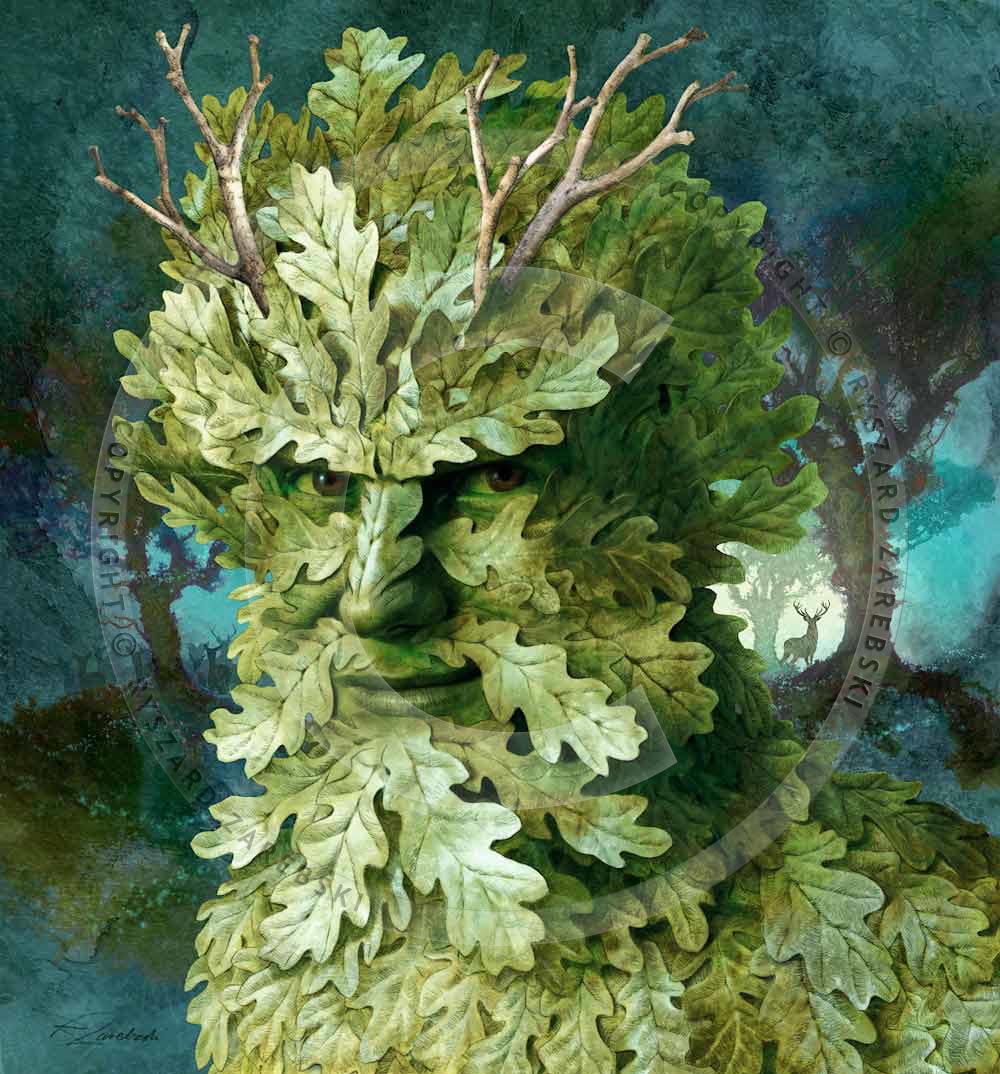
Puck is possibly one of the most famous and popular figures in English fairy tradition. He is also known as Robin Goodfellow and some sources believe that his roots could go back as far as the Greek God Pan and to the Pagan deity, the Green Man. The name, Puck, derives from the Middle English 'pook' or 'pouke', another word for an elf or sprite. He is similar to the German spuk, a hobgoblin, and the Dutch spook, 'a ghost', although the last is denied by some linguists. There also seem to be similarities with the Welsh 'pwca', and the Icelandic 'púki', both being imps, and with the shapechanging Irish 'phooka'.

In early England, the name Puck seems to have been used in association with the Devil, probably through the encouragement of the Church. Examples of this particular use can be found in Langland's Piers Plowman. In Ben Jonson's play, The Sod Shepherd, the term 'Puck-hairy' is used, which may originally come from the German picklehäring, a jester. 
 
To be 'pooke-ledden' in Worcestershire once meant the same thing as to be 'pixy-led' in Devon. Another phrase likened to being pixy-led is Robin Goodfellow has been with you tonight; a phrase that can be found as early as 1531. In Robert Burton's Anatomy of Melancholie, we are told 'Necromancers take upon them to raise and lay them at their pleasures: and so likewise those which Mizaldus calls Ambulones, that walk about at midnight on great heaths and desert places, which (saith Lavater) 'draw men out of the way, and lead them all night a bye-way, or quite bar them of their way,' these have several names in several places; we commonly call them Pucks.' This statement identifies Puck with the 'Jack-o'-lanthorn', 'Will-o'-the-wisp', and 'Friar Rush'; different names for a misleading spirit which, with his shifting light, manipulated travellers into bogs and bad situations, much like the hero of Robin Goodfellow. Here we find Robin, misleading travellers with the sound of his voice and causing general mischief, linking him with Puck. According to this play, Robin apparently shape-changes into a horse and tempts travellers into riding him, when he would bear them into pools and ponds. This links him not just to Puck but to the Hampshire spirit once known as the 'colt-pixy'. The colt-pixy was believed to tempt other horses into bogs and quagmires. In Chester we find the 'picktree-brag' in the likeness of the Galloway Pony, which was believed to drop strangers and travellers into stagnant ponds before retreating with an outburst of laughter. Sometimes the picktree-brag would take the likeness of a calf sporting a white handkerchief around its neck and a bushy tail, or, at times, it would appear as an ass. The Irish phooka was also believed to take the form of a horse. As the 'lob', 'lob-lie-by-the-fire', or 'lubberfiend', Puck is equated with the Irish leprechaun or lubberkin. This association probably stems from the French lubin, with Puck assuming the role of heath-dwelling domestic spirit. In this role, according to John Milton in L'Allegro:

Tells how the drudging Gobin swet
To ern his Cream-bowle duly set,
When in one night, ere glimps of morn,
His shadowy Flale hath thresh'd the Corn
That ten day-labourers could not end,
Then lies him down the Lubbar Fend.
And stretch'd out all the Chimney's length,
Basks at the fire his hairy strength 
 
Milton's Puck is not small, as he might be perceived today, but nearer to a Green Man. Joseph Ritson tells of another unnamed source that is of some relation to Milton, giving us another description of Puck, although somewhat similar to Milton's: '...she, particularly, told of his thrashing the corn, churning the butter, drinking the milk, &c. and, when all was done, 'lying before the fire like some rough hurgin bear.'' 
 
Both Milton and Ritson give the impression that Puck is also a domestic spirit. Puck would thresh the corn to earn a bowl of cream before relaxing by the fire, much like the household Brownie, Hob or Hobgoblin. The Hobgoblin or Hob was despised by the 17th Puritans. A Hob is really just a shortened version of the name Robert or Robin, which was once a term used for the Devil. However, Puck the Hobgoblin later became a much loved character of children's literature with Rudyard Kipling's Puck of Pook's Hill (1906) and Rewards and Fairies (1910). 

Kipling's Puck is extremely critical of the common modern image of the fairy: 'Can you wonder that the People of the Hills don't care to be confused with that pointy-winged, wand-waving, sugar-and-shake-your-head set of imposters? Butterfly wings, indeed!' Kipling's Puck is the oldest thing in England and not only is he critical of modern fairies, he is immune to many of the things once believed to deter them. ''By Oak, Ash and Thorn!' Cried Puck, taking off his blue cap. 'I like you too. Sprinkle plenty of salt on the biscuit, Dan, and I'll eat it with you. That'll show you the sort of person I am.  Some of us,' - he went on, with his mouth full – 'couldn't abide Salt, of Horse-shoes over the door, or Mountain-ash berries, or Running water, or Cold Iron, or the sound of Church bells. But I am Puck!' 

A Midsummer Night's Dream (Original)
 
A Midsummer Night's Dream, by William Shakespeare, gives us a summary of Puck which was probably drawn from folklore sources. 
 
Fairy: Either I mistake your shape and making quite,
Or else you are that shrewd and knavish sprite
Called Robin Goodfellow. Are you not he
That frights the maidens of the villagery
Skim milk and sometime labour in the quern,
And bootless make the breathless housewife churn,
And sometimes make the drink to bear no harm,
Mislead night-wanderers, laughing at their harm?
Those that Hobgoblins, call you and sweet puck,
You do their work, and they shall have good luck,
Are you not he?
Puck: Thou speakest aright;
I am that merry wanderer of the night.
I jest to Oberon and make him smile.
When I a fat and bean fed horse beguile,
Neighing in the likeness of a filly foal,
And sometimes lurk I in a gossip bowl
In very likeness of a roasted crab,
And when she drinks against her lips I bob
And on her withered lips dewlap pour the ale,
The wisest aunt, telling the saddest tale,
Sometimes for three foot stool mistaketh me;
Then slip I from her bum, down topple she.
And tailor cries, and falls into a cough;
And then the whole quire hold their hips and laugh,
And waxen in their mirth, and sneeze and swear
A merrier hour was never wasted there.

This verse gives us a good overview of who Puck is as a character. Shakespeare tells us that Puck is a crafty and deceitful spirit who is often called Robin Goodfellow. He also tells us that Puck scares the village maids, steals cream and frustrates housewives by stopping their milk from turning into butter. He stops beer from foaming and misleads travellers in the night. Shakespeare also tells us that Puck is sometimes called Hobgoblin and that he will help some, giving them good luck. In the same passage, Puck himself tells us that he tricks horses into thinking he is a female horse and that, disguised as an apple, he hides in the bottom of an old woman's drink before bobbing against their lips, scaring them into spilling their drink all over themselves. He also disguises himself as a three-legged stool and waits for someone to sit on him before dropping them on the ground to make people laugh. 
 
There is some difference in opinion as to whether Puck and Robin Goodfellow are one and the same. However, from the comparisons made above, in my opinion, it is easy to see that they are, at the very least, very similar and, more likely, identical. The Hobgoblin can also be grouped in with Puck. The Mad Merry Pranks of Robin Goodfellow, possibly written by Shakespeare's friend Ben Jonson, agrees with this conclusion, telling us in the introduction: Robin Goodfellow, alias Pucke, alias Hobgoblin, in the creed of ancient superstition," says Bishop Percy, "was a kind of merry sprite... Shakespeare's statement in A Midsummer Night's Dream seems to verify the matter, showing that it's appropriate to suggest that Puck can also be called Robin Goodfellow and Hobgoblin. 

The Greek God Pan (Original)
 
When we look further back, Puck or Robin Goodfellow have been linked to the Greek God, Pan. In Midsummer: Magical Celebrations of the Summer Solstice we are told, 'Robin Goodfellow is sometimes described as having the head of a youth and the body of a goat. Like the god Pan, he has a lusty nature, small horns on his head, and carries musical pipes. It may be that he is the fairy remnant of the ancient horned god or nature spirits, since there originally seem to have been a race of pucks.' 

The Green Man (Original)
 
A connection has been made between Robin Goodfellow and the Green Man, a Pagan nature deity. In The Paganism Reader by Chas Clifton, the connection between links both Robin Goodfellow and the Green Man to Robin Hood. 'It should come as no surprise to find that the same Robin Goodfellow is none other than the Green Man or the spirit of the spring found in many old morris dances. The Green Man whose effigy was carved by masons on a boss in the cloisters of Norwich Cathedral, in the transept of Llantilio Crossenny church in Monmouthshire, among the decorations of Rosslyn Chapel near Edinburgh and in many other sacred edifices. The Green Man whose smiling face appears among the carvings on the front of one of the oldest inns in Sussex, at Alfriston. The same Robin whom the General Assembly of the Church of Scotland petitioned King James VI in 1577 and again in 1578 to ban, in connection with the performing of plays featuring Robin Hood, King of the Man, on the Sabbath day, mainly because of the unseemly ribaldry of the vulgar people on these occasions.' It is interesting that carvings of the Green Man can be found in many churches and cathedrals across the country. In most cases, the Church had a low view of the very idea of the Green Man due to his connection with not only Paganism but blasphemous gods. It is believed that many of these images were carved into the stone walls of churches and cathedrals secretly and without the permission of the Church authorities. The Green Man represents Nature, renewal, and reproduction, and is closely linked to the passing of the seasons as well as the waxing and waning of the sun. 

Robin Hood (Original)
 
The Church's opinion of Puck, Robin Goodfellow and the Green Man, and subsequently the public's opinion, was that they were associated with the Devil. This can be seen in William Langland's The Vision of Piers Plowman, with statements such as: 'Nor neither heat, nor hail nor none hell's pouke,' which refers to puck as a demon, and 'Out of the pouke's poundfold no mainprise may fetch us.' This last statement actually means that no bail will get you out of the demon's prison. Langland makes a pouke, later changed to puck, a great adversary to God and man. This is, undoubtedly, a view that was encouraged by the church. It is interesting to note that, during the witch trials, a favoured name for witches familiars was Robin – from Robin Goodfellow and, therefore, Puck. This could potentially have been an embellishment made by the Church and their authorities. In his translation of Ovid's Metamorphoses, Arthur Golding also gives the impression that he linked a pouke with the Devil: 
 
'The country where Chymeara that same 'pouke'
With goatish body, lion's head and breast, and dragon's tail.'

Some sources also believe that Robin Hood could have originated as Puck. This is much debated and many seem to disagree. Some sources tell us that Robin Hood is actually a corruption of Robin of the wood or Robin in the Wood. There are many things that could link Hood with Goodfellow. Robin Hood: From Darkwood to Hollywood states: 'In European lore we find that elves of the wood were seen with Hoods and that Robin Hood is linked with Robin Goodfellow, otherwise now known as Puck or Hob... As Puck he can be traced across the entire European continent and it is believed to be of Proto-Indo-European origin, revealing the ancient nature of this particular strand of folklore. As Hob he is the Hobgoblin and Hob is also interchangeable with Rob or indeed Hod.... Puck on the other hand as a Nature spirit doesn't care for our perceptions, he can manipulate nature to serve his own ends. In this respect Robin Hood has also been linked with the global phenomenon of the Green Man or Wildman of the Woods.' Some sources, however, argue that the similarities between Robin Hood and Puck are not definitive proof that the two are actually linked. In Imagining Robin Hood we are told,''Moreover Robin Goodfellow was a prankster, and... Robin Hood himself takes on the shape of a prankster in at least one story. One cannot therefore dismiss out of hand the links between Robin Hood, the green outlaw and the Maytime setting with hidden and deep-rooted folk memories. But this is a long was from arguing, as many folklorists have, that Robin Hood is essentially the personification of a pagan deity, the mythic Green Man who encapsulated the power of nature and man's oneness with the earth.' Robin Hood's connection to the Green Man and Robin Goodfellow, and, alternatively, the Green Man's/ Robin Goodfellow's connection with May Day is interesting. May Day was once a moveable feast day which was dependent on the first blossoming of the hawthorn and, according to Mike Harding, the author of A Little Book of the Green Man, 'was the signal for all and sundry to hie them away to the woods for a mass orgy.' The difficult winters and bad diets meant not only high fatalities but low fertility, so it was important to make sure there were plenty of babies by way of women having many sexual partners. Children born of these orgies went under the name of the Robin Hood games and later became known as Robson, Robinson or Hudson. It was only when Cromwell put an end to these festivals that the 'Robin Hood games' came to an end.

In conclusion, Puck is a mischievous, domestic fairy who is also known as Robin Goodfellow and Hobgoblin or Hob, which is a shortened version of Robin. He has the ability to shapeshift into a horse, calf, donkey and, in some cases, an eagle, and loves to play tricks on people and to make mischief, misleading travellers in the night and laughing at them. He has also been known to do house and farm work to earn the reward of cream or milk, much like the English Brownie. Puck can be traced back to the Greek God, Pan and to the Pagan Green Man. Puck has connections with the European 'Hoods', or elves of the woods, often connecting him with Robin Hood, which can, again, be traced back to the Pagan Green Man, along with Robin Goodfellow and Hobgoblin.. He has been called pouke, pooke and poake, which have been terms used for a demon or the Devil. His association with the Devil is due to his connection to, what the Church considered, blasphemous Gods. This, in turn, has given the household Hobgoblin a bad name, with further associations with the Devil. However, in modern times, Puck is seen as a good natured and somewhat troublesome fairy, more often connected with William Shakespeare's play, A Midsummer Night's Dream and, as a popular and much loved character in children's literature, with Rudyard Kipling's Puck of Pook's Hill

Next time:  We will look at the witch's familiar, which also has a little something to do with fairies. 

Friday, 15 February 2013

How Fairy Traditions Influence Modern Ireland

How Fairy Traditions Influence Modern Ireland

Fairy traditions and beliefs were once rife in Ireland and, while they do not continue in the modern age to the extent that they once did, fairies still hold influence over Ireland today.  Lets look at some cases in which people's beliefs have influenced modern Ireland.

In March 1997, an electricity substation was intended to be built on an old fairy fort in Kilkeel, Ireland. However, once work began on the project, a chain of accidents occurred, some of which included failures of machinery and injuries to those involved. While the Irish are not necessarily avid believers in fairies, they do respect that disturbing such places may invite bad luck and, consequently, blamed fairies for this run of bad luck. This belief had repercussions, with the substation being relocated. There are many other examples of this Irish belief of ill luck following those that disturb old fairy forts, causing problems in the construction of buildings and also roads.

The fairy bush which moved a motorway (Original)
 
This deep-rooted belief surfaced in 2000, in Latoon, Co. Clare, when workers refused to destroy a hawthorn bush which stood in the way of the £100m bypass of Newmarket-on-Fergus. Hawthorn bushes are said to be sacred to fairies and it is considered an invitation of bad luck to cut one, let alone to destroy it. Consequently, the road was constructed around the hawthorn bush as opposed to destroying it.

Fairies make the news in Ireland (Original)
In January, 2007, fairies were blamed for problems with electricity poles that had been erected in Sooey, Ireland. ESB contractors erected a number of electricity poles, two of which were placed within 20 yards of a fairy fort. However, within a short time, these two poles were bent over by the wind. The contractors returned and straightened the poles, only for them to fall over during the Christmas holiday period. While non-believers blamed strong winds, some locals insisted that the fairies were showing their disapproval. One local man was quoted as saying, 'Some of the others have bent over a bit but none have been knocked over completely like the two near the fort.' He added that those local to the area had 'great respect for the fairy fort' and that it had never before been interfered with for fear of what may have followed.

The Hill of Tara (Original)
Another example of the Irish apprehension of fairy forts occurred during the construction of the M3 motorway in Ireland. Apparently, during the planning of the M3's construction, Eddie Lennihan, a storyteller, warned the Irish Government against destroying the fairy forts of Tara Skryne Valley and that, if they did, they would be cursed. A spokesman for the National Roads Authority allegedly mocked the seanchai and said that they were unconcerned. In June 2007, Dick Roche, the Minister for the Environment, signed an order to destroy Lismullin Henge, a 4000 year old astronomical observatory and place of worship that has been called one of the most important archaeological finds of the century and has, by the Irish, been associated with fairies, and work on the M3 began. A series of accidents followed. Dick Roche was held up by an armed gang, was demoted and lost his job; the Minister of Transport, Martin Cullen was almost sucked out of a helicopter when the door fell off; the chief Health and Safety Officer was seriously injured by a falling tree when the felling of trees began at Rath Lugh; and a worker was killed when he became trapped in a fairy house. Then, in the summer of 2009, several large wasps nests, which, according to Celtic Lore, are associated with the anger of Mother Earth, were discovered throughout the Valley. The destruction of the many fairy forts along with the occurrence of accidents has led many of the Irish to believe that they have been cursed. Anti-highway activist, Carmel Divine told reporters that a 'modern day Curse of Tara' has been unleashed on Ireland due to the 'destruction and desecration of the M3 Motorway'. She claims that all of Ireland's troubles date back to 2007, when the work on the M3 began and that, as long as humans continue to meddle with sacred ground, the curse will remain.

In 2011, locals blamed the bankruptcy of Sean Quinn's multi-billion euro empire on fairies. They believe that Quinn incurred the fairy's wrath when he relocated a 400 year old megalithic tomb in order to expand his quarry near Ballyconnel. Eddie Leniham was quoted as saying, 'You don't interfere with a fort, a 'sceach', or fairy bush...' He added that while the belief in these traditions is not as strong as it once was, it is far from gone.

The Aughrim Wedge Tomb in the grounds of the Slieve Russell Hotel in Ballyconnell, Co Cavan (Original)

The occurrence at Kilkeel, as I have demonstrated above, is not an unusual event in Ireland. The fear of destroying forts and raths due to the repercussions that may follow has come up during many different construction projects over the years and, while a hindrance to the Irish Government and construction companies, this belief helps to preserve Ireland's many archaeological sites that would otherwise be destroyed.

Next time: We will learn about Puck, his origins and how he is portrayed today.

Wednesday, 13 February 2013

The Tipperary Horror

WARNING: What you are about to read is pretty horrific. 

The Tipperary Horror

Irish belief in fairies is still present today, although not to the extent that it used to be.  The Tipperary Horror, or The Burning of Bridget Cleary reveals how prevalent their beliefs were.

26-year-old Bridget Cleary, married Michael Cleary, a cooper who has been described as ''a clever fellow', lived in a labourers cottage with Bridget's father, Patrick Bollard.  They lived in a sparsely populated area, around 15 miles from Clonmel, where Bridget supplemented the family's income by selling eggs and making dresses.  Bridget was quite popular and, according to Judge O'Brien, ''a young married woman, suspecting no harm, guilty of no offence, virtuous and respectable in all her conduct and all her proceedings.'' 

Bridget and Michael's wedding photo (Original)

On Wednesday 13th March, 1985, Dr Crean made a house call to Bridget's home.  The visit had been requested on the 11th but he had been unable to come until the 13th.  Bridget was in bed and, while he noted that she was suffering from nervous excitement and slight bronchitis, the doctor commented that he saw ''nothing in the case likely to cause death.''  He gave Bridget some medicine and left the house, never to see her again.

On the same afternoon, Bridget was visited by Father Ryan, who later said that, "she did not converse with him, except as a priest, and her conversation was quite coherent and intelligible."  He too left with no idea of the torture and persecution that Bridget was suffering at the time.  He spoke with Michael Cleary when he left the house, explaining that he had prepared Bridget for death as she was very sick.  He enquired as to whether the doctor had been drunk before examining the medicine he had prescribed.  While Father Ryan was not a man of medicine, he was educated and well respected.  He told Cleary that he didn't approve of the medicine, stating ''that the doctor was never sober.''  Because of the events that followed, Dr Crean would be discharged from his duties in disgrace.

Nothing more is known about Wednesday 13th, so we come to Thursday 14th, when Father Ryan received a messenger requesting his presence at the Cleary household.  According to later accounts, ''he told the messenger that having administered the last rites of the Church on the previous day, there was no need to see her again so soon! He did not consider her dangerously ill.''  It emerged later that night, that Michael Cleary did not believe the doctor's medicine to be working and that he'd consulted with Denis Ganey, the local fairy-doctor, convinced that his wife had been taken by the fairies, who had left a fairy changeling in her place.

That night, having heard about Bridget's illness, William Simpson and his wife, Minnie, left their house between nine and ten o'clock to visit.  As they neared the house the met Mrs Johanna Burke, Bridget's cousin, and her daughter, Katie.  The Simpsons asked how Bridget was and were told, ''They are giving her herbs, got from Ganey, over the mountain, and nobody will be let in for some time."  These four then waited outside the Cleary household, waiting to be let in.  William Simpson later said that he heard cries coming from the house, along with a voice shouting, ''Take it you b**ch, you old faggot, or we will burn you!''  They were apparently administering a cure prescribed by the fairy doctor.  This cure required the herbs to be boiled in milk given by a cow after calving.  Ganey had said that it should be fed to Bridget ''three times three'' before midnight.  A pint of this concoction had been prepared on the fire and then fed to a reluctant Bridget.  The threats overheard by William Simpson were actually during the second force-feeding of this vile concoction, during which a poker was heated and used on her forehead, with Cleary demanding, ''Eat you witch and begone in the name of God.''

Shortly after hearing this, the door opened and they four outside heard someone shout, ''Away she go!  Away she go!''  Simpson later learned that the door had been opened and the words shouted to permit the fairies to leave.

In these moments the Simpsons and the Burkes managed to get into the house to find four men - John Dunne, an old man, Patrick Kennedy, James Kennedy and William Kennedy, all young men, brothers of Mrs Burke and first cousins of Bridget, ''holding Bridget Cleary down to the bed.  She was on her back, and had a night-dress on her.  Her husband, Michael Cleary, was standing by the bedside.''  Bridget's father and William Ahearne, described as a young man of sixteen, were also present.

Micheal called for a liquid and asked for someone to throw it onto Bridget.  Mary Kennedy, the mother of Mrs Burke, brought the liquid in a saucepan, asking ''What do you want of it, is it to drown her?''  Cleary snatched the saucepan, throwing some of the contents in Bridget's face, drenching her.  This liquid was apparently a mixture of urine and hen's droppings.  Bridget was struggling and crying out, ''Leave me alone!''  Simpson watched on as Michael spooned more of the liquid 'cure' into Bridget's mouth.  She was held down by the men for ten further minutes, with one man holding a hand over her mouth to prevent her from spitting the liquid out.  The men apparently ''kept her body swinging about the whole time, and shouting, 'Away with you!  Come back, Bridget Boland,in the name of God!'  Bridget was screaming, and all the time the others chanted 'Come home Bridget Boland.''' They then proceeded to slap her, trying to drive out the witch with the pain.

From what he saw, Simpson asserted that ''they thought Bridget Cleary was a witch,'' or that she was at least possessed by a witch, whom they ''endeaoured to hunt out of the house by torturing her body.''  Shortly after, Bridget was lifted out of bed and carried to the kitchen fire by John Dunne, Patrick, William and James Kennedy.  Simpson noticed red marks on Bridget's forehead and someone said that they'd had to ''use the red poker on her to make her take the medicine.''  Cleary then asked her, ''Are you Bridget Boland, wife of Michael Cleary, in the name of God?''  She evidently hadn't answered loudly enough, and John Dunne apparently called out, ''Make down a good fire, we will make her answer.''

Bridget was then held over the fire and Simpson ''could see her body resting on the bars of the grate where the fire was burning.''  She, in her weakened state, did little to resist, although she was conscious and aware of what was happening.  During this time, the Rosary was recited and her husband asked the following question: Are you Bridget Boland, wife of Michael Cleary, in the name of God?  Bridget told the men ''not to make a herring of her,'' and to ''give her a chance.''  It was around eleven-thirty and the men were getting nervous, saying, ''if the questions aren't answered by midnight, the real Bridget Cleary would be lost forever.''  At this point, Bridget's father, Patrick Boland asked the question again.

Bridget responded, ''I am Dada, I am.  I am Bridget Boland, daughter of Patrick Boland, in the name of God.'' At this point Bridget was still over the fire, her nightdress beginning to singe, and the smell of the scorched cloth filled the room.  Simpson later said, ''They were all speaking and saying, Do you think it is her that is there?  And the answer would be 'Yes,' and they were all delighted.''

Bridget was put back into bed and the women dressed her in a clean chemise.  Bridget was then asked to identify the people that were present which she did successfully.  The Kennedys left at around one o'clock, Dunne and Ahearne left at around two o'clock.  The Simpsons and the Burkes didn't leave until around six o'clock on the morning of the 15th.  There had been thirteen people present on that night and no one outside of this seemed to know or care about what was taking place.

And so we reach Friday 15th March at the time the Simpson couple were leaving the Cleary household.  Mr Simpson later said, ''Cleary then went for the priest, as he wanted to have Mass said in the house to banish the evil spirits.''  Father Ryan stated, ''At seven o'clock on Friday morning I was next summoned.  Michael Cleary asked me to come to his house and celebrate Mass: his wife had had a very bad night!''  As Father Ryan was entitled to a fee for these services, he quickly agreed and went to say Mass where Bridget lay in bed.  Still he seemed to have no idea that something was seriously wrong.  He said, ''She seemed more nervous and excited than on Wednesday... her husband and father were present before Mass began, but I could not say who was there during its celebration... I asked Cleary was he giving his wife the medicine the doctor ordered?  Cleary answered that he had no faith in it.  I told him that it should be administered.  Cleary replied that people may have some remedy of their own that could do more good that doctors' medicine.'' 

William Simpson returned at around midday, as did Thomas Smith, a farmer who stopped by for ten minutes to see how she was feeling.  She was visited by several other people, but Bridget didn't utter a single complaint about her suffering, nor did anyone seem to notice anything odd or unusual about her behaviour.  Johanna Burke was at the Cleary household for most of the day.  Bridget was apparently ''in her right mind, only frightened at everything,'' and who could blame her.

At eight o'clock that evening, Michael sent Johanna and Katie to get Thomas Smith and David Hogan.  Smith later said, ''We all went to Cleary's, and found Michael Cleary, Mary Kennedy, Johanna Meara, Pat Leahy, and Pat Boland in the bedroom.  Michael held a bottle and said to his terrified wife, ''Will you take this now as Tom Smith and David Hogan are here?  In the name of the Father, Son and Holy Ghost.''  Smith enquired as the what was in the bottle with Cleary responding that it was holy water.  Bridget agreed, taking the liquid after saying, ''In the name of the Father, Son and Holy Ghost.''

Following this, the men went and sat by the fire, with the women helping Bridget dress before joining them.  Talk turned to witchcraft and charms.  Smith stayed until midnight, leaving Michael, Patrick Boland, Mary Kennedy, Patrick, James and William Kennedy, Johanna and Katie Burke at the house.  Apparently Bridget and Michael had had an argument earlier on in the day, when Bridget had been given a piece of silver, which Michael believed she had rubbed on her leg.  This was seen as a sign of witchcraft and this argument continued as they sat on the fire, with Michael stating that she was ''making pishrogues.''  Bridget responded, ''I did not rub it on my leg.  I used no pishrogues.'' (Pishrogues meaning black magic.)

Johanna stated that they'd continued ''talking about fairies,'' with Bridget saying to her husband, ''Your mother used to go with the fairies; that is why you think I am going with them.''

This comment seemed to upset Michael, who said, ''Did my mother tell you that?'' Bridget responded, ''She did.  That she gave two nights with them.''  This was a devastating allegation, especially in front of company, casting doubt upon everything about Cleary, his mother and her sanity, along with his fertility and manhood.  The tension grew, while the guests pretended to be oblivious.  Johanna made tea, offering Bridget a cup, but Michael stopped her, instead cutting three small pieces of bread and jam, saying she should eat them before having tea.  He began to feed her the bread, asking after each piece ''Are you Bridget Cleary, wife of Michael Cleary, in the name of the Father, Son and Holy Ghost?''  This was known as the ''ordeal by bread'' and, while Bridget managed to swallow two dry pieces of bread, she  refused to eat the third piece until she had tea.  Michael became furious and snapped, threatening ''If you won't take it, down you go!''  He threw her onto the ground, her head hitting the floor with a resounding crack, put his knee on her chest and, with one hand on her throat, forced the piece of bread and jam into her mouth and down her throat, shouting, ''Swallow it, swallow it.  Is it down?  Swallow it witch.''  He began to tear at her clothing and there was pandemonium as everyone tried to get out of the way.  Most were forced out of the kitchen and into the safety of the bedrooms.

Now let Johanna Burke describe the horrifying details of what occurred next:

Michael Cleary stripped his wife's clothes off, except her chemise, and got a lighted stick out of the fire, and held it near her mouth.  My mother (Mary Kennedy), brothers (Patrick, James and William Kennedy), and myself wanted to leave, but Cleary said he had the key of the door, and the door would not be opened till he got his wife back.

At this point, Patrick Kennedy appeared in the doorway of the back bedroom where he had been asleep until the commotion woke him.  Seeing Bridget's chemise was alight, he said, ''For the love of God, man, don't be letting her burn.''  Cleary responded, ''She's not my wife.  She's a deceiver sent in her place.  She's deceived us all, even the priest today, but she won't any more.  As I began it with her, I shall finish it with her.  You'll see her go up the chimney this night, or else.''  Patrick, as Johanna later testified, wanted to leave and demanded that the door be opened so they could leave, but Cleary blocked his way, drawing a knife from his pocket and threatened to take the life of anyone attempting to leave before his wife returned.  He forced Patrick and anyone that had followed him into the bedrooms, saying ''If any of you come out, I'll roast you down same as her.''

Johanna continued: They were crying in the room and wanting  to get out.  I saw Cleary throw lamp-oil on her.  When she was burning she turned to me and called out, 'Oh, Han, Han!  Make him stop and give us a chance.'  I endeavoured to get out for the peelers.  My brother William went up into the other room and fell in a weakness, and my mother threw Easter water over him.  Bridget Cleary was all this time burning on the hearth and the house was full of smoke and smell.  I had to go up to the room.  I could not stand it.  Cleary then came up into the room where we were and took away a large sack bag.  He said, 'Hold your tongue, Hannah, it is not Bridget I am burning. You will soon see her go up the chimney.'  My brothers, James and William, said, 'Burn her if you like, but give us the key and let us get out.'  While she was burning, Cleary screamed out, 'She is burned now.  God knows I did not mean to do it.'  When I looked down into the other room again, I saw the remains of Bridget Cleary lying on the floor on a sheet.  She was lying on her face and her legs turned upwards, as if they had contracted in burning.  She was dead and burned.

Mary Kennedy, who had opened the door after Bridget stopped screaming, watched Michael move to the far corner of the kitchen to pick up an old sheet and mattress bag.  He tried to roll up Bridget's smouldering remains in the sheet, but one of her legs was sticking up at an awkward angle as it had constricted while she burned.  He brutally kicked it flat with a sickening crack which echoed through the room.  He then stuffed the wrapped remains into the bag.   Cleary then told everyone to remain where they were, warning them not to leave and left the house, locking the door from the outside.

Those remaining were gathered into the front bedroom by Patrick Boland to await Michael's return.  He arrived back around an hour later and asked Patrick Kennedy to help him bury her body.  He refused at first but soon relented ''for fear he would be killed.''  Michael told him, ''I'll run you through if you don't come out.''  When Patrick followed him, Cleary told him, ''I'll be needing your help now Patrick.  She didn't go out through the chimney, so we'll take her out through the door.  I have a hole nearly made and I'll be doing away with you too, if you're not to be helping.'' 

Fearing for his life, Patrick helped lift Bridget's body and they took her outside, with Michael again warning the others not to leave and locking the door behind him.  They took a shovel and spade, then carried the body around a quarter of a mile away from the house, to the corner of a marshy field.  Cleary had dug a shallow grave which was about three feet long, two feet wide and two feet deep.  When they arrived, it was already filling with water.  Michael threw the body into the hole, pressing it down with his foot as they covered her with dirt.  They also threw some branches and leaves onto the grave to conceal the disturbed earth before returning to the house.  Bridget wasn't found for a further six days.

On their return, Cleary gathered everyone and pulled out his knife, saying, ''I'll now take an oath or I'll drive the knife through ye.''  He swore them to silence and confronted Johanna.  ''He told me to say that I went to prepare her a drink, and, when returning, met her at the door, and that she spat at me and went out of the door, and that I could not say where she went to.'' He said that '' he would go down towards Cloneen and pretend he was half mad.''  He then said to Johanna, ''Hannah, it is hard to depend on you; but if you were to be kept in jail till you rot, DON'T TELL!''

Johanna then said, ''I went down on my knees and declared before God and man that, until the day I died, I would never tell, even if she was found.''  So we reach Saturday 16th March, with Michael washing his trousers which were covered in grease-like stains, exclaiming, ''Oh God, Hannah, there is the substance of poor Bridget's body!''  He destroyed on of Bridget's earrings so it couldn't be used as evidence against him.

After this, Cleary allowed them to leave, with only Patrick Boland remaining with Cleary.  Michael, perhaps finally realising what a horrific thing he had just done, said, ''She's burned now and God knows I would never have done it but for Jack Dunne.  It was he told me my wife was a witch.  I would never have forced her into the fire, but for him.''

John Dunne came to visit, only to find Bridget gone.  While he had suggested holding her over the fire, he said ''they did not burn her that night.  They only held her over the fire!''  He was told the story which had been concocted, adding that ''he thought he was gone with the fairies.''  He offered to search for Bridget and Cleary accepted, with the two men setting off for Kylenagranagh and the whole area near it. 

After the search, Cleary caved in, stating, ''She was burned last night!''  Dunne was distraught, shouting, ''You vagabond, why did you do it?''  Cleary responded, ''She was not my wife, she was too fine to be my wife.  She was two inches taller than my wife.''  Dunne was unmoved by Cleary's explanation, telling him, ''Go now and give yourself up to the authorities and to the priest.  You will have no living on earth.''  Cleary asked Dunne to go with him and, on the way, they met Michael Kennedy who went with them.  (Some versions of events tell us that Michael and John Dunne spent three nights waiting at the fairy fort, hoping to see Bridget appear on horseback and that, if he caught her as she rode by, he could cut her ropes and she would be free to return.)

They went to speak with Father Ryan, who later said, ''he saw Cleary kneeling near the altar, very nervous, and asked him into the vestry.''  Cleary wasn't confession but Father Ryan wouldn't let him as ''I did not think him fit to do so!  I coaxed him into the yard.  I began to feel afraid of him.''  Michael Kennedy took Cleary away from the chapel without confession.  Dunne told Father Ryan that ''they had burned her to death last night and buried her; and that he had been asked Cleary all the morning to give her Christian burial.''

Father Ryan, however, only told the police that ''they suspected there was foul play,'' but this small statement was enough to begin the search and subsequent discovery of Bridget Cleary's burned body and later trial.
Simpson said that he saw Cleary on the morning of Sunday 17th March, with Cleary telling him that ''his wife left home at twelve o'clock on Friday night.''  He saw him again between seven and eight o'clock that night when Cleary asked him for a revolved, saying ''that these parties who had convinced him about his wife would not go with him to the fort.''  Simpson said, ''It appeared to me that they had convinced him that his wife had gone with the fairies.  The fort was supposed to be a fairies' habitation.  He said she would be riding on a grey horse.  She told him so.  And he said they should cut the ropes tying her on the saddle, and that she would then stay with him, if he was able to keep her.''  Simpson wouldn't give him the revolver and he saw Cleary on the following Thursday night, going to the fort, knife in hand.

The police, between the 17th and 21st March, were searching for Bridget's body, with the help of Michael Kennedy, who had told the police he hadn't been at the Cleary household when Bridget had 'left'.  When they were unable to find her, Cleary, Boland, Dunne, the five Kennedys, and William Ahearne were arrested and, on the 21st, were brought before the magistrates in an open court at Clonmel.  Denis Ganey, the fairy-doctor who had provided Cleary with the herbs, was also arrested but was later released as there was no case against him.  The others that were under arrest seemed ''unconcerned: they chatted and exchanged pinches of snuff with each other.''  While Bridget's body remained undiscovered at this time, they were remanded in jail with the District-Inspector Wansbrough telling the police ''to make a deliberate search'' for the body again.  On Friday 22nd March, during the search, Sergeant Rogers found ''some broken thorn bushes freshly cut from the hedge in an angle of a field.''  He investigated further and, under a thin layer of clay, only a few inches deep, he discovered Bridget's body which he said had ''a most terrible appearance,'' with her head covered with a sack and one god earring in her left ear.  She was identified by Constable Somers, who had known her for three years, ''by her features - they were perfect.''

The following inquest was held in a vacant house close to where her body was discovered.  No one assisted in giving her a Christian burial and the police were the ones to bury her by the light of a lantern in Cloneen churchyard.

The outhouse where Bridget's body was laid for the inquest (Original)

The prisoners were returned for trial in July after a long investigation into what had occurred.  Despite the damning evidence against them, the prisoners remained cool and calm.  Judge O'Brien commented, ''This case demonstrates a degree of darkness in the mind, not of one person, but of several, a moral darkness, even religious darkness, the disclosure of which had come with surprise on many persons.'' Despite this comment, the sentences were extraordinarily lenient, with the charge of murder being withdrawn, being replaced by manslaughter.  Cleary was found guilty and was sent into penal servitude for twenty years.  Patrick Kennedy was found guilty of wounding and was ''the most guilty of all, except Michael Cleary,'' according to Judge O'Brien, and was sentenced to five years penal servitude.  John Dunne, probably the least guilty, was sentenced to three years penal servitude.  William and James Kennedy received a year and a half imprisonment.  Patrick Boland and Michael Kennedy received six months.  Judge O'Brien said, when it was time to sentence Mary Kennedy, ''I will not pass any sentence on this poor old woman.''

Michael Cleary served 15 years of his sentence and was released on 28th April 1910.  He immediately moved to Liverpool before immigrating to Montreal, Canada to live the rest of his life where no one knew what he'd done.  During his sentence, Cleary maintained that he had not killed his wife and that, to the end, he believed that the fairies had taken her and left in her place a changeling.

To say that there is darkness and unpleasantness in fairy folklore and beliefs, when looking at this case, is probably an understatement.  Perhaps the fairies themselves do not have a dark side.  Instead it is the people who had such strong and absolute beliefs in the lore they had been taught, are themselves the ones with the dark and terrible side, as shown in the case of Bridget Cleary.  Bridget later became known as ''the last witch burned in Ireland.''  After her horrific and terrifying ordeal, may she rest in peace.

Bridget Cleary's grave (Original)

Next time: As this post is so long, I'm going to leave the Royal Changelings until the next post.  If there is anything you would like to read about in the future I would love to hear your suggestions.
Thanks for reading!
Hypersmash.com

Tuesday, 12 February 2013

The Otherworld And Fairy Changelings

The Otherworld

The Celts believed strongly that fairies had kingdoms across the seas in a land that could not be seen by the human eye.  It is, perhaps, what we might call a parallel universe, with the Celts describing this kingdom as being between the earth and the heavens.

The Otherworld was protected by strong fairy magic and many places were suggested for its location, including islands, dunes, dun-hills, forests, rivers and lakesA humble cottage or grand castle could be the Otherworld and it could appear during the night for mortals to see but would usually vanish by morning.  The Otherworld can move from one location to another, or there may even be more than one Otherworld.  However, most traditions put the Otherworld's location in Western Ocean, much like Atlantis.   Legend tells us that the Otherworld is made up of three levels: the upperworld, middle world and underworld and that it is the realm of gods, spirits and the dead as well as fairies.

In 1908, far out in the Atlantic, an island appeared which could be seen from West Ireland.  The island had been seen before and was named Hy Brasil.  Many men of intelligence testified to having seen this island but many explained the sighting as an illusion of the senses, much like a mirage in the desert.  However, those that saw the island, which disappeared soon after appearing, believed they had seen to fairy Otherworld.

A depiction of Hy Brasil which some believe is the Otherworld (Original)

Time moves differently in the Otherworld.  Where a century could pass in the mortal world, only a year would pass in the Otherworld.  It would seem that time in the Otherworld had stood still in comparison to the mortal world.  Those living in the Otherworld do not age as they do in the mortal world, instead remaining young forever.

In Irish manuscripts, the Otherworld bears many names: Tir-na-nOg (The Land of Youths), Tir-Innambeo (The Land of the Living), Tir-Tairngire (The Land of Promise), Tir-N-aill (The Other Land), Mad Mar (The Great Plain) and Mag Mell (The Plain Agreeable).  We will look at the Irish Tir-na-nOg in a later entry as the myths surrounding this belief are very in depth and I would like the opportunity to explain it to you as best I can.

To be able enter the Otherworld one had to acquire a 'passport'.  This was usually a silver branch of the sacred apple tree bearing blossom or fruit.  However, this had to be freely given by the 'queen of the land of the Ever-Living and Ever-Young.  Sometimes an apple was enough to gain entrance.  Once inside the Otherworld it is said that the apple branch could produce music which was so relaxing to the mortal that they forgot their troubles and stopped grieving for those stolen by the fairy women.  The Otherworld is also said to be open to mortals at magical times such as Beltane or Samhain, Midsummer, dusk, dawn or midnight.  Mortals might find the Otherworld in places such as fairy rings, mounds and stone circles.  Sometimes they might be found by accident through a mist gate.
A mist gate is a wreath of strange mist which surrounds a fairy mound, ring, stone circle or other magical place.  If you were to find a gap in the mist you might be able to pass through into the Otherworld.
 Could this be a mist gate? (Original)


Fairy Changelings 
Come at our call, O Sighe mother!
Come and remove your offspring.
Food and drink he has received,
And kindness from Band-o-teagh.
Here he no longer shall stay,
But depart to the Divine Matha.
Restore the child, O Bean-Sighe!
And food shall be left for thy people.
When the cloth is spread on the harvest field
On the short grass newly mown.
Food shall be left on the dresser-shelf,
And the hearthstone shall be clean,
When the Clann Sighe come in crowds,
And sweep in rings round the floor,
And hold their feast at the fire.
Restore the mortal child, O Bean-Sighe!
And receive thine own at our hands.
(An Irish incantation to restore a stolen child from the fairies) 

Medieval folklore tells us that fairies sometimes stole human babies, replacing them with a changeling – a fairy child with identical physical appearance but perhaps less pretty, prone to bursts of temper and whose temperament has gone from contented to fretful. The stolen child was taken to the Otherworld – the fairy realm – where it would remain.  Should a child's temperament change for the worse, it was often assumed that the the child had been changed and this seems to have occurred more in rural communities.  It was never believed that the child might have some mental or physical illness and, in many documented cases, the child was often neglected to the point that it died, or was killed.

A typical tale comes from the mountains of Wales, where a farmer and his wife lived together with their infant son.  One day, when the farmer was working in the fields, the wife was called away to tend the health of an elderly woman who lived nearby.  As her son was sleeping, she decided to leave him at home as she didn't want to disturb him.  However, when the wife was walking home she crossed paths with the Twyleth Teg - the fairies of Wales.  Immediately fearing the worst, she rushed home only to find that her son still slept soundly.  She quickly scattered salt on the windowsills and the doorstep to protect her child, but it was already too late.  Where he had once been a jolly, chubby child, he grew pale and howled in his cradle for hour after hour.  The farmer quickly noticed something was wrong saying, The child is not ours.  He belongs to the Twyleth Teg.  We have to put him out on the hillside and wait to see if the fairies claim him.
The wife, however, refused to do this, continuing to feed, dress and clean the child despite his face now looking like that of a wise old man and his baby teeth growing into points.  The boy's apetite grew and grew while his body and limbs shrunk.  He ate through their supplies and continued to scream for more.  The wife, despairing, left the boy at home and sought the advice of her old neighbour.
The old woman instructed the famer's wife to get a large hen's egg and to break it in front of the child.  Then she needed to fill the shell with porridge, before setting it to boil over the fire.  The wife followed the instructions and, upon placing the egg shell over the fire, the infant asked what are you doing?  The wife was shocked to hear him speak but answered as her neighbour had instructed her to.  I'm making dinner for the men in the fields.  They'll be hungry after working all day.  The infant seemed to find this greatly amusing, and said Acorn before oak I knew, and an egg before a hen, but never before  have I seen, an eggbrew dinner for harvest men.  The boy's words betrayed his age and the wife knew that her husband had been right.  This boy was not theirs.  He belonged to the fairies.  
Quickly, she piled coals onto the fire until it roared with heat.  The boy again asked her what she was doing and she replied Preparing to throw you on the fire.  Snatching him up, the wife threw him onto the fire and watched as he turned into smoke which left the house through the chimney.  And when she turned around, she discovered that the Twyleth Teg had returned her son.
There are many variations of this story.  Sometimes the threat of violence seems to have been enough to betray the nature of the fairy changeling and, in other tales, the wife brews beer instead of porridge in the egg shell.

A Changeling Baby (Original)

Many reasons have been given for the fairies' stealing human children.  Some tell us that the children they take are destined to live their lives as servants and slaves, or even as pets for the amusement of their fairy masters.  Some tales suggest a darker purpose - blood.  The fairies must pay the devil in blood every seven years and they prefer to pay with human blood rather than their own.  Other traditions tell us that the beauty of human children is what attracts a fairy, also leading them to steal beautiful women, artists and musicians.  Procreation in fairy lore is widely debated, with some stories telling us that fairies do procreate but not as often as mortals and, by occasionally interbreeding with humans, as well as claiming mortal children as their own, they bring new blood, strengthening their own bloodlines.  Other traditions, however, suggest that fairies cannot breed or do so very rarely, causing them to resent human fertility and to steal children because of their jealousy.

In the Highlands of Scotland, according to J. G. Campbell, a changeling was known by its large teeth, its inordinate appetite, its fondness for music and it powers of dancing, its precocity and from some unguarded remark as to its own age.  In Germany, an usuallly thick head and neck, or abnormal proportions of the head were thought to be at least one of the marks of a changeling.  'The Prophet Jones' who had quite a knowledge of Welsh folklore once described what he believed to be a changeling: There was something diabolical in his aspect, but especially in his motions.  He had a dark, tawney complection and made disagreeable screaming sounds.  And so it becomes apparent that if a child were to be mentally disabled or physically disfigured, if a child had what might be considered strange habits, it was usually regarded as a changeling.

Fairy changelings are not always children, but merely take on the appearance of a child.  They are sometimes nasty, old fairies that enjoy causing misery ; or they are fairies that crave human food and breastmilk.  In some cases, the fairy changeling is so old that it has been abandoned by its own race who are happy to be rid of it in exchange for a beautiful, chubby human child.  In these cases, the changeling usually withers and dies as the human parents watch and grieve for the loss of a baby that they believe to be their own.
There are, however, some cases where the changeling is not a fairy at all.  Instead the human child is replaced with a stock of wood or a block of wax, enchanted to resemble the child.  In these cases, once discovered the 'infant' must be thrown onto the fire, whereupon either the wood burns, or the wax melts, and the human child is restored.

Prevention

There were recommendations to prevent fairy abductions.  It was advised that unbaptized children should not be taken on journeys in Scotland.  During the period before a baptism, Dutch mothers protected their children by placing garlic, salt, bread and a sharp instrument made of steel either in the child's cradle or over a door.  In Devonshire, mothers would pin their children to their sides to prevent them from being stolen by pixies and, the iron in the pin was probably regardedas an efficient way to keep the elves away.  In Germany they put orant (horehound/ soapdragon), blue majoram, black cumin, a right shirtsleeve and a left stocking in the child's cradle to prevent the Nickert from harming the child.  The modern Greeks, even now, dread witchcraft and avoid leaving their children alone for the first eight nights, during which the Greek Church refuse to baptize a child.
Charms made from oak and ivy which stopped a fairy from entering the house were also used, along with salt scattered on the doorstep, branches of Rowan and the father's shirt being draped over the child's cradle.  Interestingly, most children that were supposedly stolen were boys, so another way to prevent this was to dress boys in girls' clothing and to call them by a girls' name.  Newborn babies needed to be guarded for the first three days and then watched closely until their baptism, lessening the threat of abduction.  However, older children could also be stolen or tempted into the Otherworld and were warned to beware of the fairies that lived in the countryside.

Cures

A number of afflictions were often diagnosed as the child being a changeling including wasting illnesses, physical deformities, mental illnesses, cystic fibrosis, cerebal palsy, spina bifida and Downs synodrom.  Up until the 19th century in England and Ireland, these children were often subjected to violent and unpleasant 'cures' intended to force the fairy to flee and to bring back the 'real' child.  

While some of these cures were sometimes harmless, such as cooking food in an eggshell, others involved leaving the child outside to fend for itself or holding the child on a shovel over an open fire, in the belief that the fairies wouldn't allow their own kind to suffer and would replace the changeling with the human child.  One case, in 1826, tells us of Anne Roche who killed her child when his grandmother recommended Anne bathe him three times in the icy waters of the local river.  Anne succeeded only in drowning the child.  In 1845, a female 'changeling' was subjected to being placed in a basket full of wood-shavings and was suspended over the kitchen fire until the shavings ignited.  Other 'cures' involved feeding or bathing the child in solutions of foxglove which often proved fatal.


Next time I will tell you about one of the most famous changeling cases ever reported.  I will also tell you about royal changelings.
Please note, I do not claim to have any ownership of the images on this blog.  Where possible, I will provide a link to where I found the image.